A Bold Tip-Off: Basketball’s New Challenger
The year was 1967, and professional basketball was not the cultural juggernaut it is today. The NBA had just 10 teams, TV coverage was spotty, and many arenas were half-empty on game night. Basketball was fighting for attention against baseball and football, and the pace of the game was slower and more structured.
That is when a group of investors and entrepreneurs decided the sport needed a shake-up. The result was the American Basketball Association (ABA), a league that promised to make basketball flashier, faster and more fan-friendly. Their goal was not just to compete with the NBA, but to reinvent what professional basketball could look like.
Innovation On and Off the Court
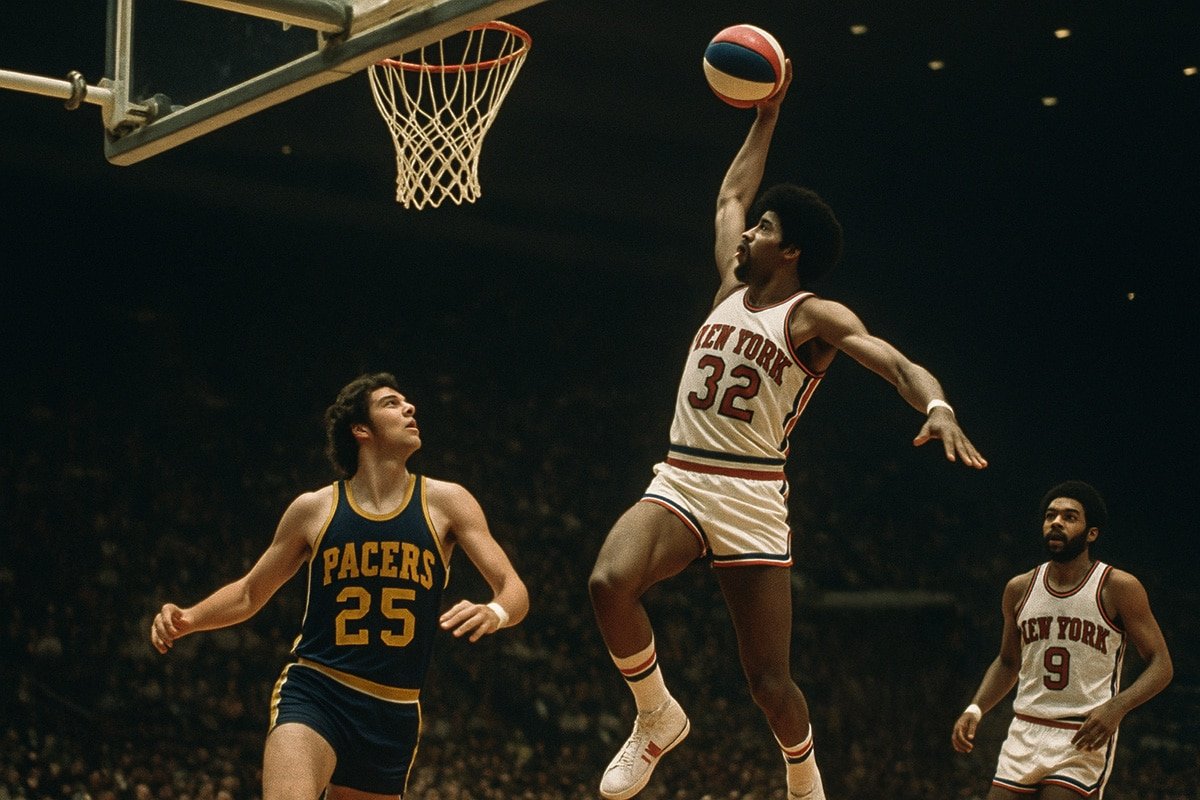
From the very beginning, the ABA was bold. Its most iconic innovation, the red, white and blue basketball, was designed to make games more visually appealing for fans watching on the new medium of color television. The league also introduced the three-point line, a concept considered radical at the time. It encouraged teams to spread the floor, shoot from deep and keep fans on the edge of their seats.
But the ABA’s real revolution was cultural. It embraced style. Players were encouraged to dunk, to run and to entertain. This was the league of Julius “Dr. J” Erving, whose soaring dunks turned games into must-see events. George “The Iceman” Gervin brought finesse and swagger with his finger roll. The league also gave opportunities to players who had been overlooked or underutilized in the NBA, creating a platform for their star power to shine.
Expanding the Map
The ABA also changed the business geography of basketball. While the NBA concentrated on big cities, the ABA targeted new markets in San Antonio, Indianapolis, Denver and Louisville, places that would become passionate basketball hotbeds. This strategy expanded the footprint of professional basketball and cultivated fanbases that still exist today.
Financial Highs and Lows
The ABA’s creativity did not always come with financial stability. Teams relocated frequently, owners struggled to keep franchises afloat, and attendance could be unpredictable. At its peak, the league had 11 teams, but franchises folded or moved almost every season. Despite this instability, the ABA developed a loyal following and pushed the NBA to take notice. In the early 1970s, the NBA and ABA even engaged in bidding wars for college talent, driving up salaries for players and forcing the NBA to reconsider its conservative approach.
The Merger: A Win for Basketball
By 1976, after years of rivalry and financial strain, the ABA and NBA reached an agreement for four ABA teams to join the NBA. Those teams were the Indiana Pacers, Denver Nuggets, San Antonio Spurs and New York Nets (now the Brooklyn Nets). Two additional franchises, the Kentucky Colonels and the Spirits of St. Louis, accepted buyouts.
Fun fact: The owners of the Spirits negotiated one of the most famous deals in sports history, claiming a share of future NBA TV revenue after having the foresight to recognize how important of a role that TV would play in the development of professional basketball. In 2014, the NBA finally reached a $500 million settlement with the Spirits’ owners, buying out the majority of their perpetual TV revenue rights.
The ABA’s Lasting Legacy
Though the league folded, its impact is everywhere. The three-point shot is now one of the most important weapons in the NBA. The emphasis on athleticism, dunking and highlight-reel plays became the NBA’s signature style. Even the idea of expanding into smaller markets proved brilliant. San Antonio, Denver and Indiana remain beloved NBA franchises with some of the league’s most passionate fans.
Culturally, the ABA made basketball cool. It connected the game to music, fashion and entertainment in ways the NBA had not yet embraced. The ABA made basketball fun, and that spirit lives on in today’s NBA, which is as much about personality and culture as it is about points and rebounds.
Lessons for Business Leaders
The ABA’s story is a masterclass in innovation and disruption. It did not have the money, history or infrastructure of the NBA, but it had ideas. Bold ones. It forced an entire industry to evolve.
For business owners, the takeaway is clear. Do not be afraid to challenge the status quo. New ideas can feel risky, but they can also shift markets and leave a legacy that lasts far beyond your brand’s lifespan.
At Resolution Promotions, we thrive on helping brands find their “ABA moment” or bold strategy that sets them apart and pushes their industry forward. Whether it is social media, AI-optimized content or next-level branding, we help you take the shot that changes the game.