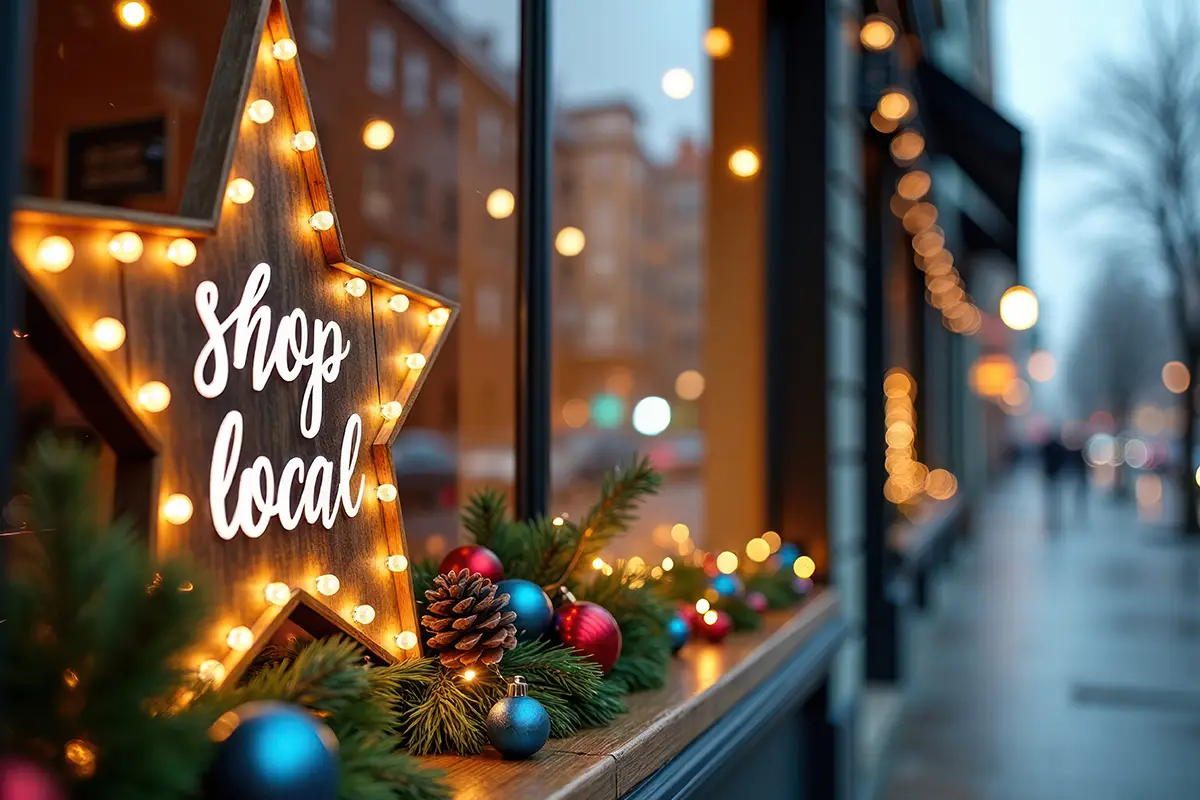
Picture the Saturday after Thanksgiving in a town like Brick or Manasquan or Red Bank. The summer crowds are long gone. The streets have their real rhythm back. The one that belongs to the people who actually live here, not the ones who visit. A bakery opens early. A gift shop unlocks its door and straightens the sign in the window. A boutique clothing store that has been here for 11 years puts out a small chalkboard on the sidewalk.
And then people come. Not in the frantic, door-busting way of the day before. In the deliberate way. The way people shop when they have decided, specifically, to show up for something. They carry coffee. They know the owner’s name. They are not looking for the lowest price. They are looking for the place that is part of the fabric of where they live.
That scene plays out in thousands of towns across the country today. It did not happen by accident. Someone built it.
November 2010: A Campaign With No Guarantee
In the fall of 2010, American Express was looking for a way to do something it had never quite managed to do before: be liked.
Amex was powerful. Prestigious, even. But it was not beloved. Its annual fees were high, its merchant acceptance was lower than Visa and Mastercard, and its reputation was more Wall Street than Main Street. The country was two years out from the worst financial crisis since the Great Depression. Big banks and big financial institutions were not exactly popular. American Express, whatever its actual merits, looked from the outside a lot like them.
The idea that emerged from their marketing team was simple enough to fit on a napkin. The Saturday after Thanksgiving, the one sandwiched between Black Friday chaos and the official start of holiday shopping season, was an orphan day. Nobody owned it. Big box retailers owned Friday. Online retailers were already claiming Monday. That Saturday, the busiest shopping weekend of the year, belonged to no one.
What if American Express gave it to small businesses?
The first Small Business Saturday launched on November 27, 2010. American Express backed it with $3 million in Facebook advertising. At the time, the largest Facebook ad buy in history. They offered cardholders a $25 statement credit for spending $25 at a small business that day. They gave participating merchants free marketing materials. They did everything they could to make the day feel real before it had any proof that it was.
One and a half million people shopped small that first Saturday.
The Moment It Stopped Being a Campaign
What happened next is the part that cannot be manufactured. In 2011, the U.S. Senate passed a resolution supporting Small Business Saturday. All 100 senators. That is not something that happens because a credit card company ran a good Facebook campaign. It happens because something touched a nerve that was already there, waiting.
By 2012, the Small Business Administration had signed on as a co-sponsor. By 2013, the day had spread to the United Kingdom. By 2015, an estimated 95 million Americans were shopping small on the Saturday after Thanksgiving. American Express had not invented a holiday so much as named one that had been trying to exist for years. The collective instinct, in communities everywhere, to protect the stores and restaurants and shops that give a town its identity.
The genius was not the ad buy. The genius was the insight underneath it, that people wanted a reason to do what they already felt they should be doing. They wanted permission to skip the mall and go to the place around the corner. They wanted to feel like showing up for their community was not just a nice thing to do but the thing to do. Today, specifically. Small Business Saturday gave them that.
That is the difference between a promotion and a movement. A promotion tells people what to buy. A movement gives people something to believe in.
What It Looks Like Now
16 years later, the numbers are real. Last year, consumers reported spending an estimated $23 billion on Small Business Saturday. At independent retailers, boutiques, restaurants, bakeries, service businesses, and the kinds of shops that do not have a corporate headquarters deciding what goes on the shelves.
American Express still supports the day, but they no longer own it. It has outgrown them. The U.S. Small Business Administration promotes it. Local chambers of commerce organize around it. Neighborhoods create their own shop local maps. Mayors show up at ribbon cuttings. The day has the kind of institutional momentum that a marketing campaign, however well funded, cannot sustain on its own for a decade and a half. It sustains itself because it means something.
Here on the Jersey Shore, that meaning is specific and close to home. The businesses that line the main streets of Brick and Toms River and Point Pleasant and Belmar are not abstractions. They are owned by people who coach Little League and sit in the same church pews and went to the same high schools as their customers. When one of them closes, something goes with it that a national chain moving into the space cannot replace. The menu changes. The name on the sign changes. And something less tangible but just as real, the particular texture of a town, changes as well.
Small Business Saturday is, at its core, an argument against that outcome. An argument that says the place around the corner is worth showing up for. Not just today. But today is a good place to start.
The Lesson Amex Accidentally Taught Every Brand
American Express set out to run a campaign. They ended up with something far more valuable: a reputation.
The company that had been seen as the card for expense accounts and airport lounges became the company that championed the bakery and the bookshop and the family-run hardware store. That repositioning did not come from a tagline. It came from doing something real, at scale, that actually helped the people it claimed to care about. The day worked because the businesses it supported were real. The customers who showed up were real. The money that stayed in local communities was real.
That is the lesson worth carrying into every marketing decision. The campaigns that become movements are the ones that tap into something people already believe. Amex did not create the desire to support small businesses. That desire existed everywhere, quietly, in millions of people who just needed a designated day and a reason to act on it.
Somewhere this morning, a bakery in Brick is opening its doors. A shopkeeper in Manasquan is straightening a display. A restaurant owner in Red Bank is getting ready for the lunch crowd. None of them are thinking about a marketing campaign that launched in 2010. They are thinking about the people who might walk through their doors today. 16 years ago, American Express gave those people another reason to show up. The rest is a reminder of what marketing can accomplish when it gets something genuinely right.
Key Takeaways
- Small Business Saturday was created by American Express in 2010 and launched on November 27 of that year with a $3 million Facebook ad campaign, which was at the time the largest in the platform’s history. The first year drew 1.5 million shoppers.
- It became a movement almost immediately. In 2011, all 100 U.S. senators passed a resolution supporting the day. By 2012, the Small Business Administration was a co-sponsor. By 2013, it had spread to the United Kingdom.
- The day works because it taps into something people already believe. Amex did not create the desire to support small businesses. It gave that desire a name, a date, and a reason to act. That is the distinction between a promotion and a movement.
- The numbers are real. Consumers reported spending an estimated $23 billion on Small Business Saturday last year. At independent retailers, restaurants, bakeries, boutiques, and service businesses across the country.
- On the Jersey Shore, it is personal. The businesses that line the main streets of Brick, Toms River, Point Pleasant, and Belmar are owned by people who are part of the same communities as their customers. When one closes, something the town cannot get back goes with it.
FAQs About Small Business Saturday
Who started Small Business Saturday and why?
American Express created Small Business Saturday in 2010. The idea was to claim the Saturday after Thanksgiving, a day sandwiched between Black Friday and Cyber Monday that no one had staked out, and give it to independent businesses. Amex backed the first year with $3 million in Facebook advertising and offered cardholders a $25 statement credit for spending $25 at a small business. The timing was deliberate. The country was still recovering from the 2008 financial crisis, big institutions were widely distrusted, and there was a genuine appetite for something that felt local and human. The first Small Business Saturday drew 1.5 million shoppers, and it has grown every year since.
How much do people actually spend on Small Business Saturday?
According to American Express’s annual Small Business Saturday Consumer Insights Survey, shoppers reported spending an estimated $23 billion on Small Business Saturday last year. That figure covers purchases at independent retailers, restaurants, service businesses, and other locally owned shops, not transactions at national chains or big box stores. For context, the day now generates more consumer spending than many major retail holidays that have been on the calendar for decades.
Why does shopping small actually matter?
The economic case is straightforward. Studies consistently show that a significantly higher percentage of money spent at locally owned businesses stays in the local economy compared to money spent at national chains. Local businesses hire locally, source locally when they can, and reinvest in the communities they operate in. But the case beyond economics is just as real. Local businesses are part of what makes a town feel like itself. The particular mix of shops and restaurants and services that gives a place its identity. That identity does not regenerate quickly once it is gone. Shopping small today is, in a direct and literal way, an investment in what your town looks like next year and the year after.
Resolution Promotions is based at the Jersey Shore, and the businesses we serve are exactly the ones Small Business Saturday was built for. If you want to make sure your business is showing up the way it should, today and every day, let’s talk.