

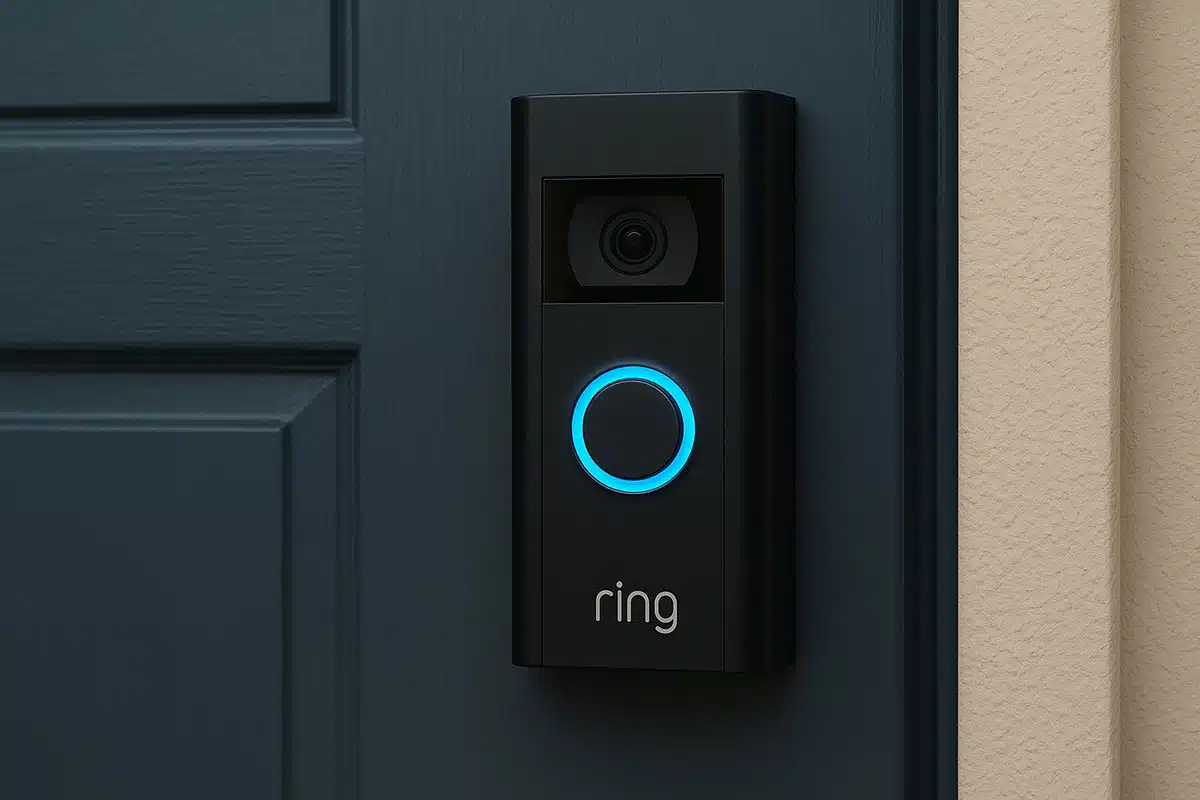
Some of the best business stories do not start with boardrooms, investors or billion-dollar visions. They start with frustration, and a garage. That is where Jamie Siminoff, a lifelong tinkerer and entrepreneur, came up with what he first called “DoorBot,” a video doorbell designed to bring a little peace of mind to homeowners.
It was a simple but powerful idea: you should be able to see who is at your door, even when you are not home. Siminoff believed in it so much that he mortgaged his house to keep the business afloat. What he did not know was that this scrappy garage invention was about to hit both its lowest low and its highest high.
The Shark Tank Snub
In 2013, Siminoff walked onto the stage of Shark Tank, pitching DoorBot as the future of home security. His ask was modest by Shark Tank standards: $700,000 for 10% of his company.
The Sharks were not convinced. Kevin O’Leary dismissed it as a “dog” of a product. Mark Cuban doubted the market. Barbara Corcoran said it did not solve a big enough problem. And while some showed flickers of interest, none bit. Siminoff walked off set humiliated, broke and uncertain if his idea would ever find its place.
But rejection was not the end. It was fuel.
Rebranding, Rebuilding and a Stroke of Luck
Instead of shelving the idea, Siminoff went back to the drawing board. He rebranded DoorBot as Ring, a name that captured both the product’s purpose and its emotional value (safety at your doorstep).
Slowly, Ring started to gain traction. Customer word-of-mouth grew, reviews improved, and the product became sleeker. Then came a turning point. Richard Branson, founder of Virgin, became a believer and invested. The brand began to be seen not just as a gadget but as part of the growing movement toward smart homes.
The timing could not have been better. As consumers were warming up to connected devices, Ring positioned itself as not just a doorbell, but a home security solution.
Amazon Comes Knocking
By 2018, Ring was exploding. Millions of households were adopting the device, and the company was valued in the billions. And that is when Amazon, with its Alexa ecosystem and deep interest in the smart home, came calling.
The deal? A staggering $1 billion acquisition, one of the largest in Amazon’s history. Siminoff, once the guy laughed off of Shark Tank, had built one of the most valuable consumer tech companies of the decade. And in a stroke of irony, Ring became a product featured on Shark Tank again,only this time as a success story.
Lessons for Entrepreneurs and Small Businesses
The story of Ring is not just about a smart doorbell. It is about perseverance, timing and belief. Here are the takeaways every entrepreneur can use:
- Rejection is not the end. It is merely feedback. What Siminoff took from Shark Tank was not a death sentence. It was data that helped refine the pitch and the product.
- Persistence builds success. When others walked away, Siminoff doubled down. That resilience separated him from thousands of other failed startups.
- Timing matters. The product was always good, but it became great when the smart home trend caught fire. Being ready when the market shifts is everything.
- Branding elevates the product. “DoorBot” sounded like a toy. “Ring” sounded like security. The name change helped unlock mainstream appeal.
Turning Rejection into Your Breakthrough
The arc of Ring shows us something bigger than just a billion-dollar acquisition. It proves that the greatest growth can come not from easy wins, but from the sting of being told “no.”
At Resolution Promotions, we believe small and mid-sized businesses can take the same lesson to heart. Marketing, branding and persistence matter just as much for local businesses as they do for billion-dollar startups. Because the next breakthrough might be sitting in your garage right now.